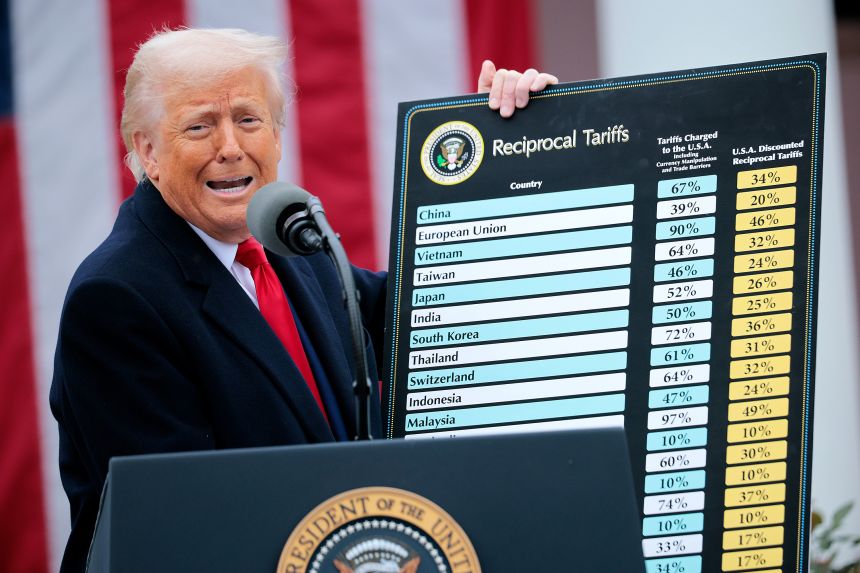
President Donald Trump is doubling down on his trade agenda after the Supreme Court of the United States rejected his sweeping use of executive authority to impose tariffs.
Following the ruling, Trump announced on Truth Social that he would raise the existing 10% worldwide tariffs to 15% — the maximum level allowed under Section 122 of the Trade Act of 1974. The provision grants the president temporary authority to impose tariffs for up to 150 days without congressional approval.
In an interview, former Trump economic adviser Steve Moore offered a mixed reaction. He said the Supreme Court’s decision reinforces constitutional separation of powers, noting that tariffs function as taxes and traditionally originate in Congress.
However, Moore also defended Trump’s broader strategy, arguing that the president has effectively used tariffs as leverage to secure more favorable trade terms from global partners.
A Shift in U.S. Trade Policy
Trump’s America First trade agenda has marked a departure from decades of U.S. policy favoring liberalized global trade. Instead, his administration has emphasized reciprocity — pushing countries such as China, Japan, Canada, and members of the European Union to lower tariffs on American goods.
Supporters argue the strategy has delivered results, pointing to strong stock market performance and cooling inflation figures. Critics, however, warn that aggressive tariff policies risk long-term trade instability and retaliation from allies.
Moore acknowledged the tension between free-market principles and protectionist tools but said Trump’s approach aims to create what he calls a “level playing field” for American industries and workers.
What Comes Next?
The Supreme Court’s ruling may limit the president’s unilateral authority on trade matters moving forward, potentially forcing greater congressional involvement in future tariff actions. Still, Trump’s decision to utilize temporary powers under the Trade Act signals that trade negotiations will remain a central feature of his economic strategy.
With the U.S. economy showing signs of strength, the debate now shifts to whether higher tariffs will continue to fuel growth — or spark renewed political and economic challenges at home and abroad.