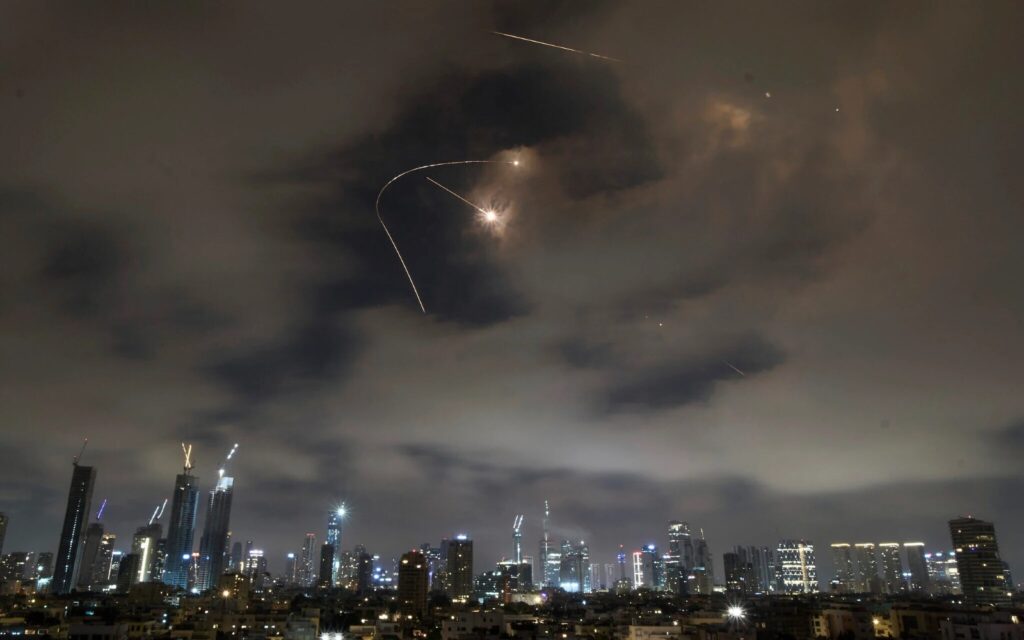
Israel says it is preparing for one to two weeks of continued military strikes on Iran, as tensions between the two regional powers escalate sharply. Despite U.S. strikes targeting Iranian missile launchers, incoming fire toward Israel has slowed but not stopped, with air raid sirens repeatedly sounding across major cities.
Overnight, ballistic missiles were intercepted above Tel Aviv, marking multiple launch attempts from Iran since midnight. Israel’s air defense systems worked to shoot down the incoming threats, while residents sought shelter amid ongoing alerts.
According to Israeli officials, Tehran is facing internal coordination challenges as Israeli strikes continue inside Iran. The Israel Defense Forces (IDF) released new footage showing an F-35 fighter jet intercepting what it described as an Iranian aircraft. Meanwhile, the United States Central Command (CENTCOM) published video of U.S. forces targeting ballistic missile launch positions inside Iran, signaling deepening American involvement.
Hezbollah and Regional Tensions
Israel has also shifted its focus northward toward Hezbollah, the Iran-backed militant group based in Lebanon. The IDF issued a large-scale evacuation warning in areas described as Hezbollah strongholds, urging civilians to leave immediately — a sign that further bombardment could be imminent. Lebanese leadership is expected to respond publicly as the situation unfolds.
Israeli officials say the broader goal is to weaken both Iran’s missile capabilities and the regional network of allied militias that threaten Israeli and U.S. forces.
U.S. Escalation and Strategic Strikes
The United States has expanded its operations beyond missile defense. In a dramatic development, an American torpedo reportedly sank an Iranian frigate off the coast of Sri Lanka — described by U.S. officials as a major military victory and a signal that American forces are prepared to strike Iranian assets wherever necessary.
President Donald Trump defended the operation, arguing that Iran had rejected diplomatic offers aimed at allowing a peaceful nuclear program in exchange for ending regional aggression. U.S. negotiators, including envoy Steve Witkoff and adviser Jared Kushner, had reportedly warned that Iran possessed approximately 460 kilograms of 60% enriched uranium — material that experts say could be further refined into weapons-grade fuel.
American officials say strikes are intended to degrade Iran’s ballistic missile program and disrupt its nuclear infrastructure, which includes facilities buried deep underground.
Situation Inside Iran
Despite the mounting military pressure, there are no widespread protests reported across Iran. However, small celebrations were noted in southern areas following reports about senior leadership losses. Observers say some Iranians quietly support the operation, citing decades of political repression under Supreme Leader Ali Khamenei.
Still, analysts caution that public dissent remains limited, as previous protests have been met with severe crackdowns.
Strait of Hormuz and Global Energy Impact
The conflict has also affected global energy markets. Traffic disruptions in the Strait of Hormuz — a critical chokepoint for global oil shipments — have raised concerns about supply stability. Iran retains cruise missiles, drones, and naval mines capable of threatening shipping lanes, even though reports suggest much of its naval presence in the Gulf of Oman has been significantly damaged.
Liquefied natural gas production in Qatar has reportedly halted for the first time in decades, further heightening fears of rising global energy prices.
What Comes Next?
A key question remains: what will happen to Iran’s enriched uranium stockpiles? U.S. officials say multiple options are under consideration, including destruction or neutralization of the material. Identifying and securing these stockpiles remains a top priority as operations continue.
With Israel preparing for extended strikes and Iran vowing resistance, the region stands at a pivotal and volatile moment — one that could reshape Middle East security and global energy markets in the weeks ahead.