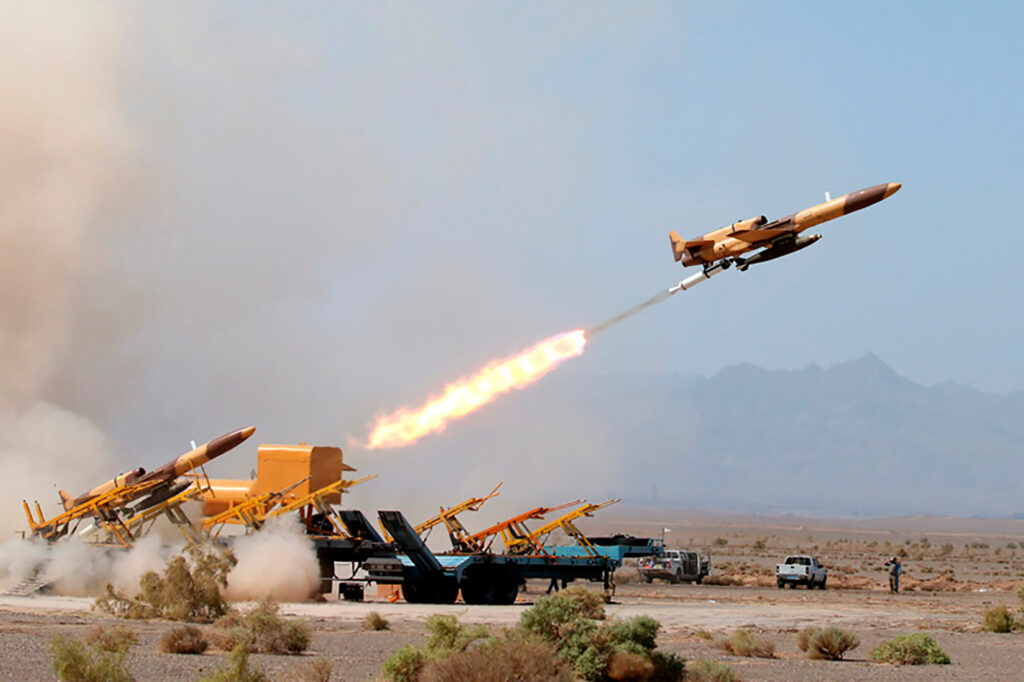
A new round of joint military exercises between Russia and Iran is drawing heightened scrutiny from U.S. officials and defense analysts, amid warnings that Tehran may be using the drills as cover to reposition advanced drone assets closer to potential strike zones.
During a segment on Fox News, contributor Brett Velicovich suggested that Iran’s participation in the exercises may be more than routine military coordination. According to the analysis, Iranian forces could be leveraging the joint operations to discreetly deploy strike-capable drones along strategic coastal areas, increasing the risk of escalation in an already volatile region.
The developments come as the United States boosts its military presence in response to rising tensions. Analysts argue that while joint drills are not unusual, the timing and scope of these exercises signal a broader strategic maneuver.
Drone Warfare at the Center of Escalation
Iran has significantly expanded its drone warfare capabilities in recent years. Experts note that Tehran has closely studied battlefield tactics emerging from the war in Ukraine, where unmanned aerial systems have reshaped modern combat. The integration of drones with cyber operations, electronic warfare, and conventional strikes has demonstrated how layered tactics can challenge even technologically superior forces.
Velicovich emphasized that U.S. surveillance platforms such as the MQ-9 Reaper serve not only as precision strike systems but also as advanced intelligence-gathering hubs. These aircraft map control nodes, monitor drone deployment patterns, and analyze communication frequencies—providing valuable real-time insight into Iranian military movements.
He warned that Iran may be operating under “plausible deniability,” mirroring tactics previously used by Russia prior to its invasion of Ukraine, when military drills masked offensive preparations. By repositioning drones under the veil of joint exercises, Iran could test U.S. and allied responses without openly crossing red lines.
Regional Implications
Security experts also point to coordination between the United States and Israel in monitoring Iranian activities. Intelligence-sharing and joint surveillance efforts are aimed at preventing surprise attacks and deterring further escalation.
Iran’s leadership in Tehran has consistently framed its military expansion as defensive. However, critics argue that the Islamic Republic has increasingly adapted drone technology for asymmetric warfare and regional destabilization.
The central concern among U.S. defense officials is Iran’s ability to strike American military bases or allied targets using swarms of drones coordinated with cyber disruptions. Analysts say waiting for an attack could prove costly; instead, proactive countermeasures and strong deterrence may be necessary to prevent further escalation.
As tensions rise, the strategic “chess match in the sky” continues—one defined not just by firepower, but by surveillance, technological innovation, and calculated positioning.