





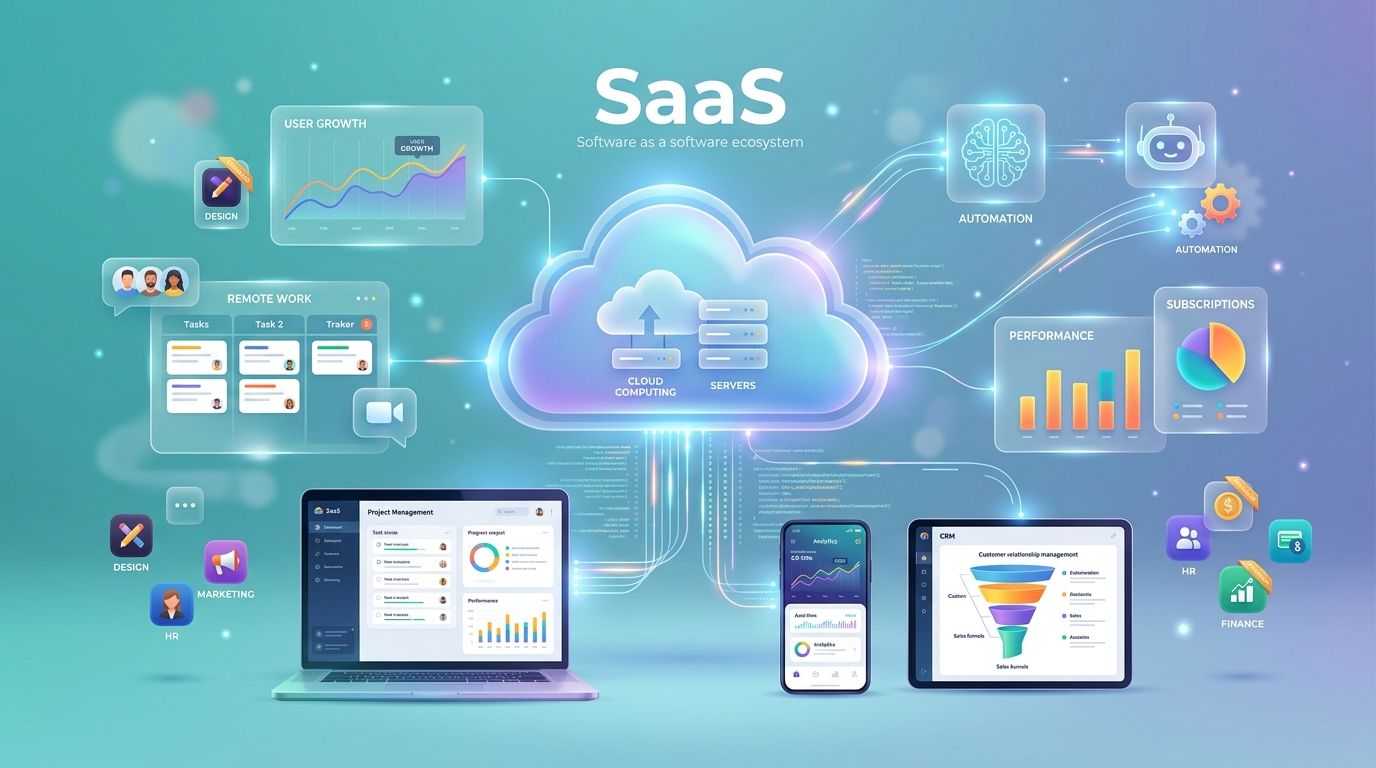
SaaS stands for Software as a Service.
It’s a way of using software online instead of downloading and installing it directly on your computer.
With SaaS, you usually pay a monthly or yearly subscription to access the software through a web browser or mobile app.
In simple terms, SaaS lets people “rent” software over the internet rather than buying it permanently.
Simple SaaS Examples
Many of the apps people use every day are SaaS products, including:
You simply create an account, log in, and start using the software online without needing complicated installation or maintenance.
How SaaS Works
A SaaS company hosts its software on cloud servers and delivers access through the internet.
Instead of managing the software themselves, users subscribe to the service and access it online.
The SaaS provider handles:
- software updates
- security
- bug fixes
- cloud storage
- server maintenance
This allows businesses and individuals to focus on using the software rather than managing technical infrastructure.
For example, a startup can begin using tools like Slack or Notion immediately without building its own internal systems or hiring a large IT team.
A Real-World SaaS Analogy
SaaS works similarly to electricity.
Most people do not build their own power stations. Instead, they pay for access to electricity when they need it.
SaaS follows the same model:
you access software as a service whenever you need it without owning or maintaining the entire system behind it.
Common Types of SaaS
Business SaaS
Business SaaS tools help companies improve communication, productivity, sales, and operations.
Popular examples include:
Creative SaaS
Creative SaaS platforms help users design graphics, edit videos, and create digital content online.
Examples include:
AI SaaS
AI SaaS products use artificial intelligence to automate tasks, generate content, and improve productivity.
Examples include:
AI-powered SaaS tools have grown rapidly as businesses increasingly adopt automation and cloud-based workflows.
Why SaaS Became So Popular
Easy Setup
Most SaaS tools can be used immediately without technical installation or advanced setup.
Access From Anywhere
Users can access SaaS applications from laptops, phones, or tablets as long as they have an internet connection.
This flexibility became especially important with remote work and global teams.
Automatic Updates
SaaS companies update their software automatically, so users always have access to the latest version.
Lower Upfront Costs
Traditional software often required expensive licenses and hardware.
SaaS replaced large upfront costs with smaller recurring subscription payments, making advanced software more accessible for startups and small businesses.
Advantages of SaaS
SaaS offers several important benefits:
- easy access from any device
- lower initial costs
- automatic updates
- cloud-based storage
- scalable infrastructure for growing businesses
- faster deployment compared to traditional software
Many companies choose SaaS because it reduces technical complexity and allows teams to collaborate more efficiently.
Disadvantages of SaaS
Despite its benefits, SaaS also has some drawbacks:
- requires a stable internet connection
- subscription costs can increase over time
- users rely on third-party providers for uptime and security
- some businesses have concerns about storing sensitive data in the cloud
For larger organizations, vendor dependence and data privacy can become important considerations.
Why SaaS Matters in 2026
SaaS has become one of the most important business models on the internet.
Modern companies increasingly rely on cloud-based software because it is flexible, scalable, and easier to maintain than traditional on-premise systems.
The rise of:
- remote work
- cloud computing
- AI automation
- online collaboration
has accelerated SaaS adoption across nearly every industry.
Some of the world’s largest SaaS companies include:
Many startups also build SaaS businesses because subscription revenue creates predictable recurring income and long-term customer relationships.
One-Sentence Definition
SaaS is software delivered through the internet on a subscription basis instead of being permanently installed and managed on your computer.